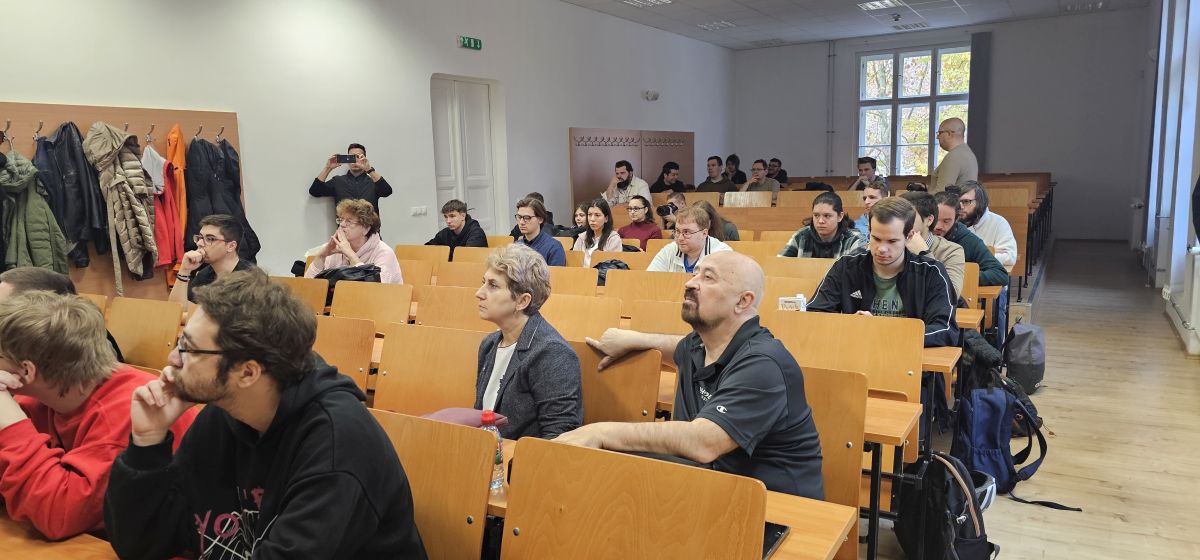
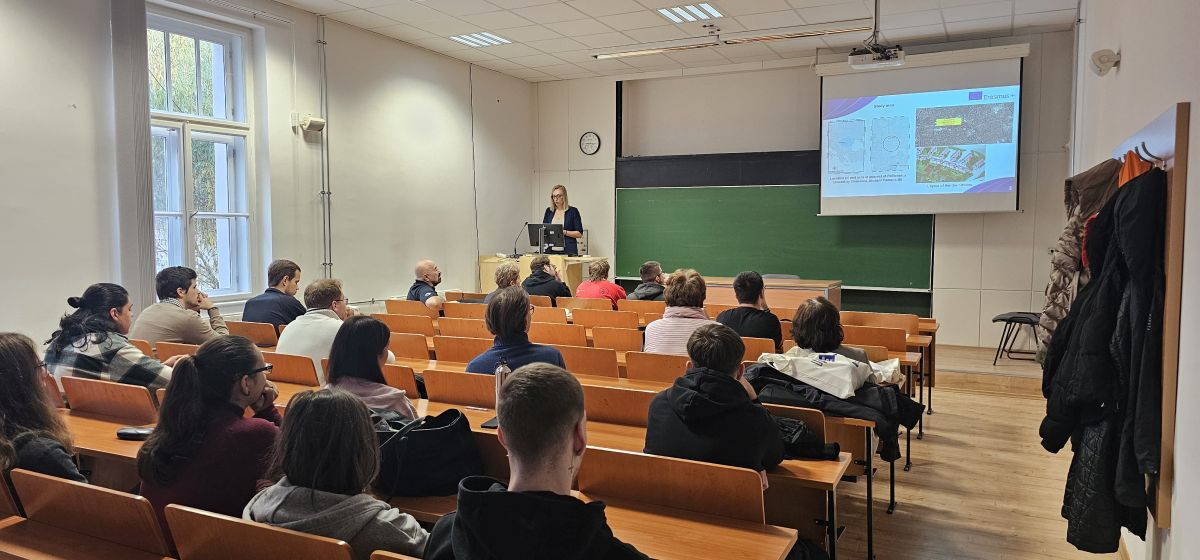
Recently, the AMK2025 Erasmus+ Teaching Week event took place at the Alba Regia Faculty, during which guest lecturers from several countries delivered engaging and valuable lectures for our students and colleagues.
The topics covered included, among others, geoinformatics and information technology, as well as the examination of application possibilities of drones and other aerial vehicles. These subjects are closely related to the scientific fields of our students.
In addition to the professional programs, international networking and the planning of future cooperation opportunities also played an important role.
In view of the success of the event, we plan to organize the program again in the coming year.
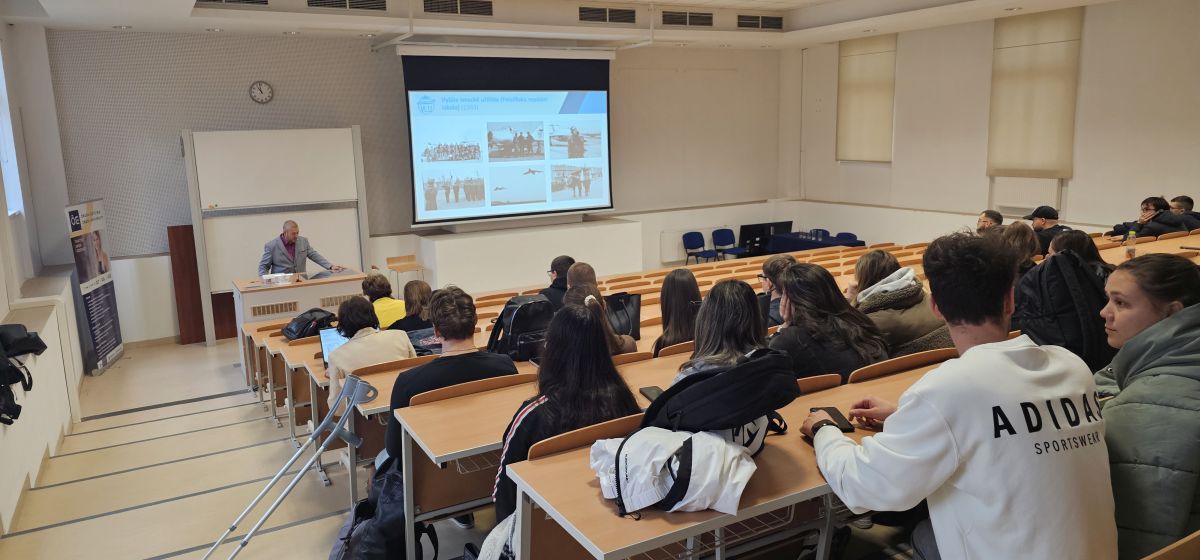
Three colleagues from Obuda University, including two instructors from our Faculty, represented our University at The 20th Annual International Scientific Conference – New Trends in Aviation Development 2025 (NTAD2025), held in Slovakia between 27–28 November 2025.
Péter Udvardy, Gábor Kánai, Tamás Jancsó, Bertalan Beszédes – Irradiance Forecast-Supported Energy Management and Controlling
The paper presents a comprehensive methodology aimed at integrating solar irradiance forecasts into photovoltaic energy management and predictive maintenance systems. The authors combine numerical weather prediction models, AI-based learning techniques, and real PV production data to improve energy storage scheduling, electric vehicle charging, and grid stability. The paper also received the Best Technological Contribution Award.
Stephen Kimathi, Bertalan Beszédes, Abdallah Benhamida – Attitude Synchronization and Position Consensus for a Multi-Agent Autonomous System
The study introduces a novel method for controlling the formation of multi-agent autonomous systems based on dual quaternions and graph theory, addressing both the spatial positioning and orientation alignment of the units. The authors develop a distributed leader–follower control strategy in which agents communicate only with their immediate neighbors while maintaining a predefined formation. Simulations conducted with four identical rigid bodies demonstrate that the proposed controller enables rapid formation acquisition, stable tracking, and formation preservation even under time-varying leader trajectories.
The conference covered a wide range of topics, including aeronautical telecommunication and information services, the design of instrument flight procedures, and flight calibration services. The event was supported by several renowned organizations, including the Technical University of Košice, Faculty of Aeronautics, and IEEE Czechoslovakia.
Privacy Overview
This website uses cookies so that we can provide you with the best user experience possible. Cookie information is stored in your browser and performs functions such as recognising you when you return to our website and helping our team to understand which sections of the website you find most interesting and useful.
Strictly Necessary Cookies
Strictly Necessary Cookie should be enabled at all times so that we can save your preferences for cookie settings.
3rd Party Cookies
This website uses Google Analytics to collect anonymous information such as the number of visitors to the site, and the most popular pages.
Keeping this cookie enabled helps us to improve our website.
Please enable Strictly Necessary Cookies first so that we can save your preferences!