Alumni Interview with Péter Ivanics (Computer Engineer)
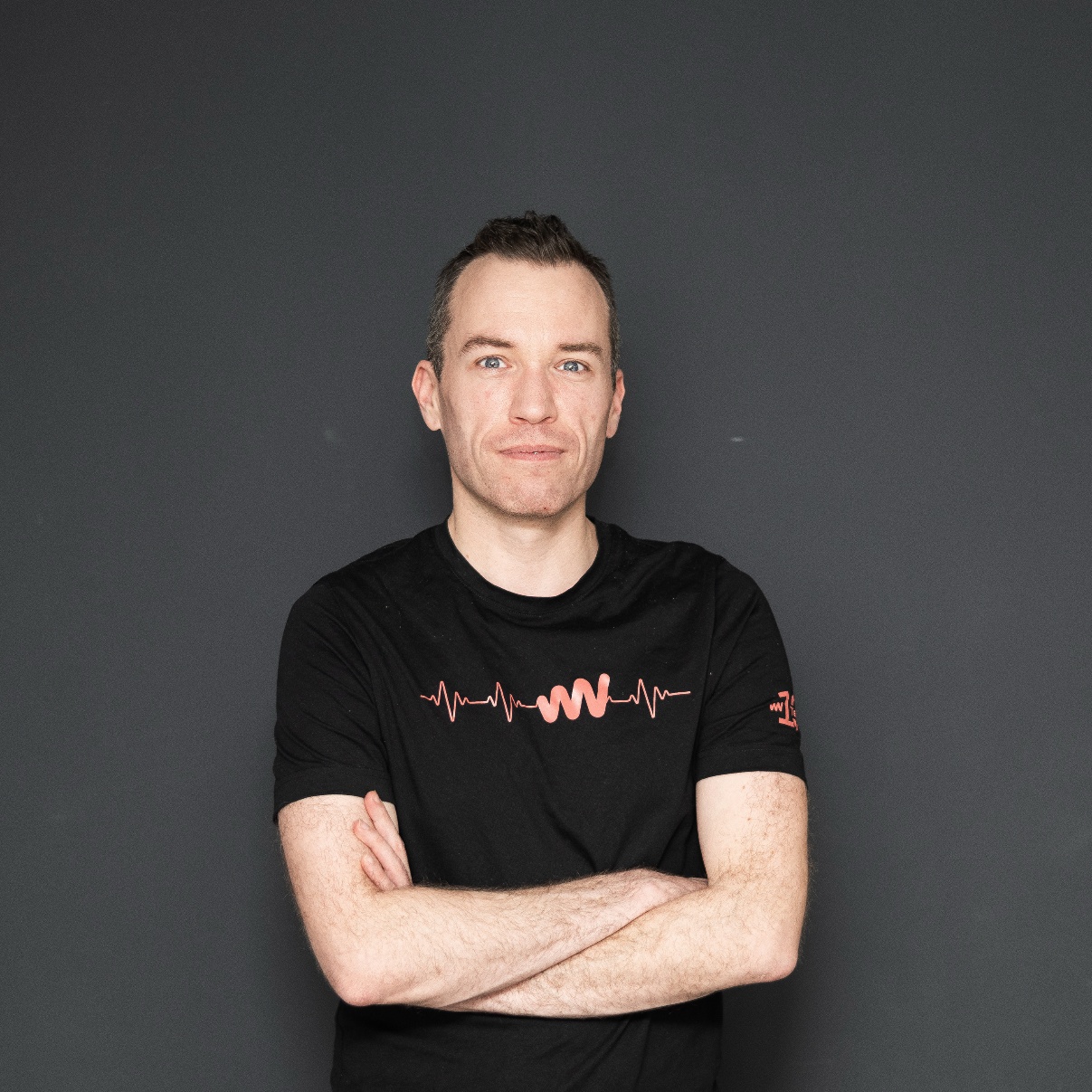
In the twenty-ninth installment of our alumni interview series, we spoke with Ivanics Péter, a graduate of Computer Engineering, who shared the story of his professional journey from his university years through studies in Finland to becoming Chief Technology Officer (CTO) at WebStar. His story reflects a commitment to lifelong learning, international experience, the challenges of becoming a leader, and the university experiences and personal relationships that continue to shape his life today.
Péter speaks openly about professional development, team building, the challenges of AI-driven organizational transformation, and the advice he would give to today’s Computer Engineering students.
(Part 29 of the Alumni Interview Series)
- Why did you choose the Alba Regia Faculty?
I grew up in Székesfehérvár. Most of my classmates planned to attend universities in other cities. They were attracted by independence, new challenges, new social circles, and moving away from their parents.
Of course, I was also interested in several universities in Budapest and elsewhere, but in the end, I decided to stay. I considered the quality of education to be just as good, while the environment was more personal and supportive, with smaller groups. The Computer Engineering program was exactly what I was looking for. Looking back, it was the right decision. Professionally and socially, I never felt I missed out on anything. - Which course or lecturer had the greatest impact on you?
From a professional perspective, I enjoyed every course related to programming. By the end of my studies, there was no doubt that I wanted to pursue a career in software development. Among the IT subjects, I would highlight computer networks, operating systems, and computer architectures, but I was also very fond of mathematics and probability theory.
I believe these courses helped shape my engineering mindset and the curiosity toward the profession that has been useful throughout my career.
Among the lecturers, I would especially mention Nagyné Hajnal Éva, Makó Margit, and Fejes Gábor. - What skills from your university years do you still use today?
Interestingly, it is not the classroom knowledge that I use the most today. The fundamentals of programming and software development are certainly valuable, but the most important thing I learned was how to learn effectively. This is where my curiosity for interdisciplinary topics developed. I genuinely enjoy learning new things and helping others do the same. For that, I am grateful to the university.
What is the first memory that comes to mind from your university years?
The freshman camp in Szolnok, where I first met my future classmates. Within a few days, friendships were formed that lasted throughout university and beyond. Besides having a great time, we received valuable advice from senior students about what to expect during our studies. - If you could choose one photograph from your university years, what would be in it?
I usually celebrated my birthday at the end of May, after the study period but before exams. Every year I organized a garden party for my classmates at my parents’ house, where I was living at the time. We did this five times altogether.
One year, 35 to 40 friends attended. There were computer engineers, electrical engineers, and engineering managers from multiple year groups. These gatherings were our way of closing the semester and preparing for the exam period. There is a photograph from one of those occasions where everyone is together, and that would be my choice. - Which former classmates or lecturers do you still keep in touch with?
Among the lecturers, I stay in regular contact with Hajnal Éva and Nagy Rezső. I also look back fondly on several members of the faculty, including Seebauer Márta, Makó Margit, Györök György, Fejes Gábor, and Horváth Árpád, whose work had a significant influence on my personal and professional development.
Among my former classmates, I regularly meet and talk with Hullár András, Badó Gábor, Trenyik Réka, Rideg Péter, Nagy Luca, Ress Gábor, Holchauser Roland, Bors Tamás, Varga Tibor, Bognár Zsanett, Ipolysági Ádám, Onódi Ádám, Huszics Márton, Vonnák Péter, and Németh Barna. - What was your first job, and what did you learn there?
My first job was at AdmiNetwork Hungary Kft. in Székesfehérvár. I gained insight into office networks, hardware systems, and IP telephony solutions. However, software development had always been my primary interest, so I often volunteered to take on tasks that motivated me more than my colleagues. This allowed me to develop new functionalities for an internal ticketing system and expand CRM and ERP solutions for one of our closest partners.
It was an excellent experience because I could grow professionally in a friendly and supportive environment. I was allowed to make mistakes and learn from them, which proved invaluable. - How did your career evolve after graduation?
My professional journey began before graduation when I spent a semester in Finland through the Erasmus program.
After completing my final exams, I joined AdmiNetwork Hungary as a software developer, having already completed my internship there. About a year later, I returned to Finland and earned a second degree in Business Information Technology at the Lapland University of Applied Sciences. I later worked as a project assistant at a summer university before joining Reslink Solutions in Helsinki as a software developer.
There I transitioned into mobile application development, primarily for iOS. Although no one in the team specialized in this technology, I volunteered to learn it and build this expertise.
After one and a half years, I joined a startup and simultaneously began my Master’s studies in Computer Science with a specialization in Machine Learning and Data Mining at the University of Helsinki. During this period, I also worked part-time for the Finnish startup Choicely.
Later, family considerations brought me back to Hungary. I met my wife in Finland, but she has roots in Pécs. In 2018, I joined the WebStar Group as a mobile developer. Since then, I have worked in project management, business analysis, and team leadership, and together with my colleagues we built an independent mobile business unit.
In 2025, I made the biggest step in my career when I became CTO of WebStar. Around the same time, I completed a second master’s degree in digital business management, complementing my technical background with business and leadership skills that are extremely valuable in my current role. - Which professional achievement are you most proud of?
I am most proud of those occasions when we build something from scratch or achieve a transformation that requires both technical and human effort from every member of the team.
One example is building the mobile business unit and team at WebStar. Another is this year’s AI transformation initiative. It is far from finished, but we have already overcome many obstacles, and that required the involvement of numerous colleagues. As a result, I believe we are now working more efficiently and delivering higher-quality outcomes. Both experiences taught us a great deal from technical, personal, and business perspectives.
Among my individual achievements, I am most proud of earning my master’s degree from the University of Helsinki. It is consistently ranked among the world’s top universities, and the program required me to acquire knowledge in many entirely new areas, demanding significant time and dedication. - What has been the greatest professional challenge you have faced?
As a software developer, understanding complex systems has been the greatest challenge. We work with large-scale systems every day, such as the Tracon Electric webshop, the MVM online customer service platform, and the National Legislation Database. Before making any modification, it is essential to understand how all the components interact and influence one another.
The biggest challenge has been this year’s AI transformation. Technically and humanly, it is much more complex than anything I have experienced before, and it affects every team within the company. The skills that helped me succeed as a software developer are almost useless in this context. Understanding different perspectives, adapting to rapid change, responding effectively, and empathizing with colleagues have become far more important. - Which skill turned out to be more important than you thought when you were younger?
The most important skill is leadership: the ability to align a team around a common direction and purpose. Together, people can achieve far more than they can individually, and the foundations of this are empathy and communication.
When I was younger, I did not consider these skills particularly important. I assumed everyone was independent and motivated enough to decide for themselves what needed to be done. In reality, that is rarely the case. Many people benefit greatly from a leader who shows the way and supports them throughout the journey.
I need to understand what motivates others and create an environment where they can make the most of their strengths. That requires emotional intelligence and effective communication.
Delegation is another skill I am still learning. I continue to work on understanding when and to whom tasks should be delegated so that success becomes a team achievement rather than an individual one. - What continues to motivate you in your work today?
The first is continuous learning. I enjoy acquiring skills and knowledge in areas that were previously unfamiliar to me. I derive equal satisfaction from helping others learn, whether through teaching, mentoring, or collaborating with colleagues.
The second is creation. I enjoy building something that did not exist before. If what we create makes the world around us better, that is even more rewarding. It is gratifying to see that the products and solutions I help create have a positive impact on the people who use them. - What does your alma mater mean to you today?
It is a place I always enjoy returning to and remembering with affection. I did not only learn the foundations of my profession there. I also gained experiences and friendships that have significantly shaped who I am today.
My university years contributed greatly to the mindset that has brought success to both my professional and personal life. The environment, the lecturers, my fellow students, and the experiences we shared all helped shape my values. I will always cherish those four years. - How do you see the role of universities in today’s world?
I believe the most important role of a university is still to establish the way of thinking that characterizes a profession. Universities also help young adults discover their interests and develop commitment to their chosen fields.
I would like to see universities provide even more practical, hands-on experience. Tremendous progress has been made in this area over the past 10 to 15 years. However, the core mission remains unchanged in my view: educating motivated, committed, and enthusiastic professionals who can succeed anywhere in the world and create lasting value after graduation. This is how the world becomes a better, more livable, and more enjoyable place. - What opportunities do you see for cooperation between alumni and current students?
For young professionals and recent graduates, the greatest challenge today is gaining practical experience. From the corporate perspective, the challenge is the opposite: finding, integrating, and retaining talented professionals.
Collaboration between alumni and students can help address both challenges. There are many possible forms of cooperation, including dual education programs, joint events, hackathons, internships, professional meetups, and many others. The key is to create opportunities where people can work together, create value, and learn from one another. - Which university course would you gladly take again as a student?
Economics, Business Economics, and Management. At the time, I did not pay much attention to these courses because I could not see how I would use that knowledge. Today, my perspective has changed completely.
I would also revisit the courses that taught the fundamentals of software development. Strong professional foundations that develop systems thinking are more important in IT today than ever before. - What advice would you give to students starting the same degree program today?
Try to apply what you learn in class as quickly as possible. Build something that you, your family members, or your friends can use every day. In doing so, you create real value, and that is something you can genuinely be proud of.
Practical, hands-on experience gained alongside your studies is an enormous advantage, both when searching for a job and when facing everyday professional challenges. - Which university story do you tell most often?
My favorite story comes from my very first semester. During my first Physics exam, Professor Hudoba György failed me instead of giving me a passing grade. He believed I was capable of much more than the performance I had shown. A few weeks later, I retook the exam and earned the highest grade.
At the time, the situation was extremely frustrating, but in the end, he was absolutely right. - Finally, we recommend an interesting podcast featuring Ivanics Péter
The CTO of WebStar speaks openly about how he transformed from a quiet, introverted high school “tech geek” into a leader responsible for major business decisions affecting both teams and clients.
The conversation covers the cooperative yet reserved nature of Finnish culture, the value of a generalist mindset, and the lessons learned from an IT project that ultimately failed financially. If you are interested in what makes a successful tech lead and how leadership skills develop over time, this episode is for you.
What do you think? When it comes to becoming a leader, which is the bigger game changer: hard skills or soft skills?
Podcast: https://open.spotify.com/episode/099RznifxikHaHBb3Mjkah