Alumni Interview with Levente Kaszai (Sports Economist)
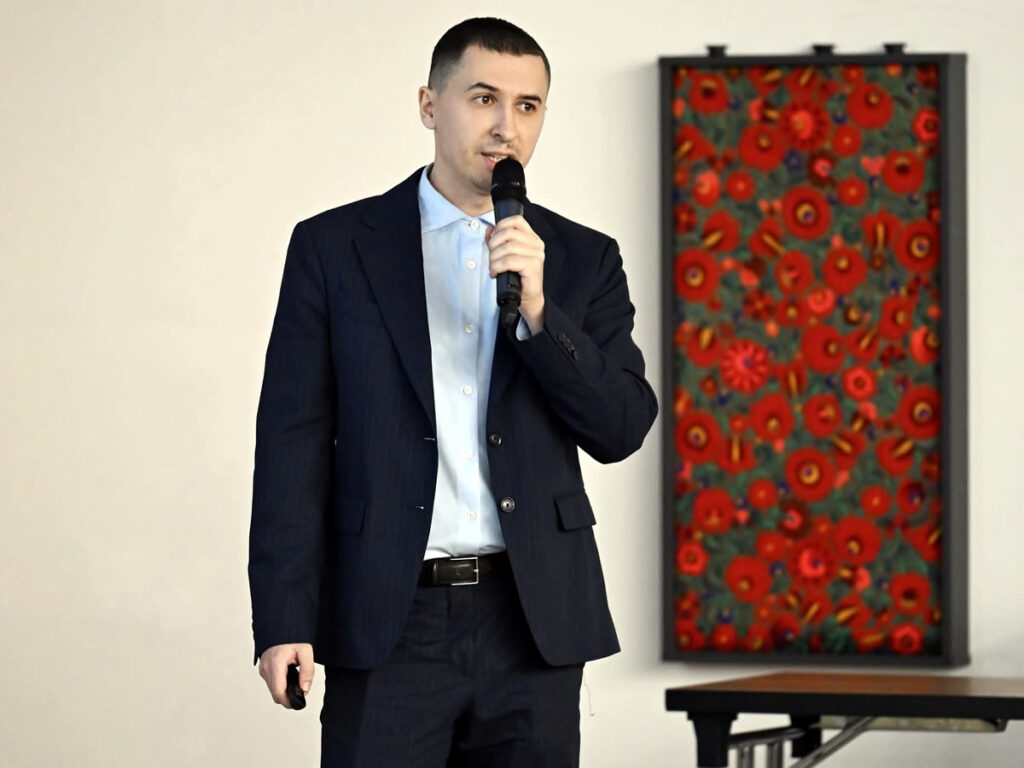
In the 27th installment of our alumni interview series, we spoke with Levente Kaszai, a graduate of the master’s program in Sports Economics, about his university years, professional journey, and commitment to sport. Levente shares his experiences from the program, the most defining moments of his studies, and how the degree contributed to building his career within one of Hungary’s leading sports organizations.
The twenty-seventh part of the alumni interview series.
- What plans and aspirations did you have when you enrolled in the master’s program in Sports Economics?
My main goal was to become part of a professional community that connected me with key stakeholders in Hungarian sport and provided a solid foundation for my future professional development.
- Why did you choose this master’s program?
I believed that the knowledge I had gained during my undergraduate studies could be complemented most effectively by the master’s program in Sports Economics, as it offers the most comprehensive insight into the industry.
- What did you hope to gain from the program, and how much of that was fulfilled?
I was looking for in-depth knowledge and a valuable professional network that I could utilize in my everyday work. Looking back, I can confidently say that these expectations were fully met.
- What is the first memory that comes to mind when you think about your university years?
The professional discussions and shared experiences with my fellow students, which created an excellent balance between academic work and student life.
- If you could choose a single photograph from your university years, what would it depict?
I would choose a photograph taken during one of the field visits organized as part of the Facility Management course, where we had the opportunity to observe the operation of complex sports facilities in practice.
- Which course, project, or lecturer had the greatest impact on you, and why?
It is difficult to highlight just one, but the course Quantitative and Qualitative Methods fundamentally shaped my perspective, as it dealt extensively with both the theoretical and applied aspects of sports data analysis.
- What was the most unexpected thing you learned at university that later proved useful?
The course The Sports Economy of Asia revealed cultural and structural connections that significantly broadened my understanding of global processes.
- What knowledge, skill, or mindset did you acquire during the program that you still use regularly today?
Critical thinking, supported by evidence-based reasoning, and the mindset that our decisions should always be backed by consistent arguments and reliable data when facing challenges.
- How did your way of thinking or your professional confidence change by the end of the program?
Through various projects and group assignments, the trust of my peers and the responsibility I was given significantly strengthened both my leadership skills and professional confidence.
- Which lecturers or fellow students do you still keep in touch with today?
There are several lecturers I have remained in contact with after graduation. Recently, Dr. habil. Krisztina András invited me to be a guest speaker at one of the November sessions of the (Sports) Innovation course. I have also had the opportunity to speak with Dr. habil. Tünde Máté, and we discussed many exciting professional topics together.
- How did the master’s program support your career development or professional placement?
I participated in the program as a dual-study student and worked as an intern at the Hungarian Canoe Federation. After graduating, the federation placed its trust in me by offering a full-time position, allowing me to immediately put my acquired knowledge into practice.
- Which professional achievement are you most proud of?
I consider it an important milestone that I had the opportunity to speak at the RAR National Professional Conference of the Hungarian Canoe Federation and at the 9th Netrisk Sports and Innovation Conference. At the same time, I am most proud of my everyday work and the efforts my colleagues and I make together for the sport of canoeing and kayaking.
- What opportunities for cooperation do you see between the alumni community and current students?
Mentorship program can create significant added value for both sides. As a student, I would have been very happy to participate in such initiatives.
- Who do you think this program is best suited for?
I would recommend it to ambitious and determined students who are not satisfied with a surface-level understanding, but instead wish to gain a systemic perspective on the sports economy and envision their future either in the sports industry or in a research and academic career.