Development of Complex Web Applications in the Age of Artificial Intelligence
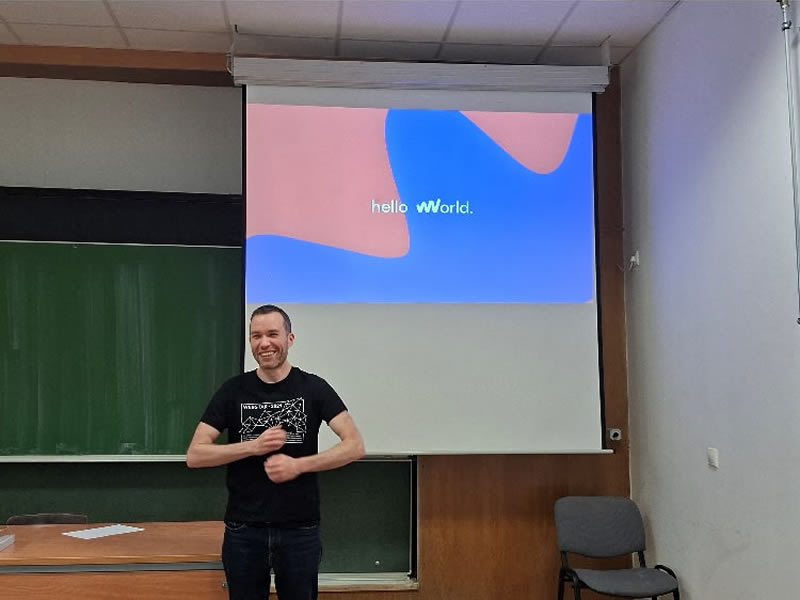
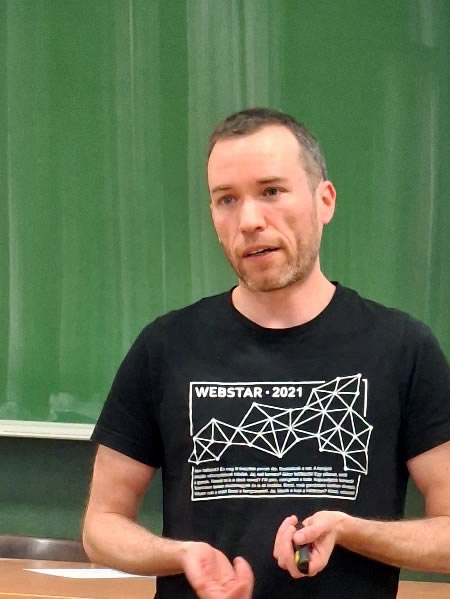
On 30 April 2026, the Bachelor’s Degree Program in Computer Engineering welcomed a guest lecturer to share professional insights and industry experience with students. The invited speaker was Péter Ivanics, a former student of the faculty, who currently serves as the Chief Technical Officer (CTO) of Webstar Group Ltd., a software development company employing nearly one hundred professionals. His presentation, entitled “Development of Complex Web Applications in the Age of Artificial Intelligence,” provided students with a valuable overview of contemporary software development practices and the rapidly evolving role of artificial intelligence in the technology sector.
During the lecture, the speaker presented his professional career path, outlining the key milestones that had shaped his development from university student to technology executive. He also introduced the profile of Webstar Group Ltd., highlighting the company’s primary areas of expertise, its typical projects, and the challenges associated with delivering large-scale software solutions for clients operating in diverse industries. Through these examples, students gained insight into the practical realities of working in a modern software development environment and the competencies required for success in the profession.
A central focus of the presentation was the development process of a complex web application. The speaker demonstrated how large-scale web systems are designed, implemented, and maintained, emphasizing the importance of architectural planning, scalability, maintainability, and code quality. Particular attention was given to selected sections of the source code that illustrated interesting technical solutions and best practices used in professional software engineering projects. By examining real-world examples, students were able to connect theoretical concepts learned during their studies with practical applications encountered in industry.
Artificial intelligence played a prominent role throughout the lecture. The speaker explained how AI-based tools and technologies can be integrated into corporate software development workflows to improve efficiency, accelerate development processes, and support decision-making. He discussed the opportunities and limitations of using AI in a business environment, as well as the potential impact of these technologies on the quality, functionality, and long-term sustainability of software products. Furthermore, he explored the broader implications of artificial intelligence for the software engineering profession, offering perspectives on how job roles, development methodologies, and workplace expectations may evolve in the near future as AI becomes increasingly embedded in everyday professional practice.
The presentation generated significant interest among the students, who actively followed the discussion and engaged with the topics presented. The combination of practical experience, technical demonstrations, and reflections on future technological trends provided a highly informative and thought-provoking learning experience. To conclude the event in an interactive and enjoyable manner, the speaker organized a short coding challenge, allowing participants to test their problem-solving skills and apply some of the concepts discussed during the lecture.
Overall, the lecture offered students a valuable opportunity to gain first-hand insight into contemporary web application development, the practical use of artificial intelligence in software engineering, and the future directions of the IT industry. The event successfully bridged the gap between academic studies and professional practice, inspiring students to further develop their technical knowledge and prepare for the challenges and opportunities of a rapidly changing technological landscape.