Alumni Interview with Dr. Péter Engler (Surveying and Land Management Engineer)
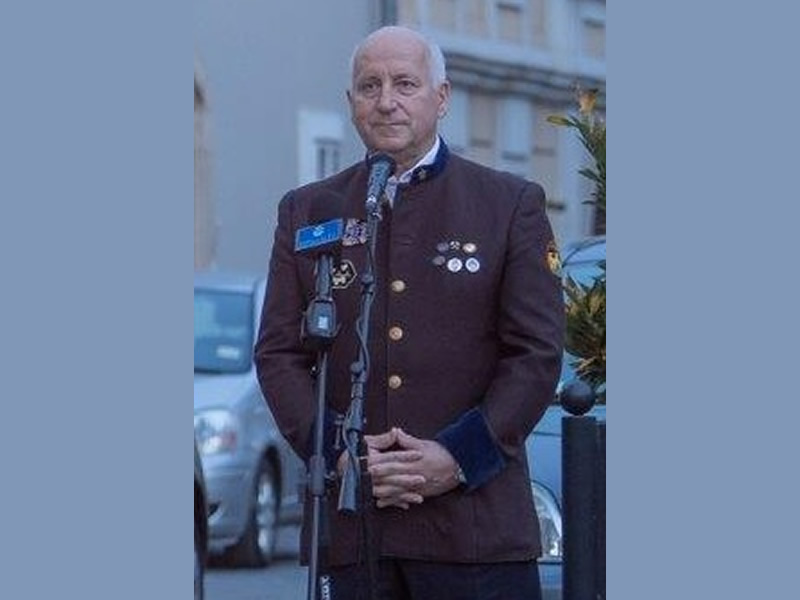
In the next installment of our Alumni Series, we spoke with a professional who played a defining role in the life of GEO not only as a student, but also as a lecturer and academic leader. Over nearly five decades, he witnessed the evolution of surveying and geoinformatics education while helping to shape the professional careers of generations of students.
In this interview, he reflects on GEO’s past through personal memories, discusses the technological transformation of the profession, highlights the importance of the Selmec traditions, and shares his thoughts on what it takes to become a skilled engineer and a dedicated professional.
- Why did you choose GEO back then?
A childhood friend of mine graduated from GEO in 1973. Through him, I first heard about surveying and learned how varied and interesting the profession was. I also loved maps, geography, and hiking. The latter two are not directly related to surveying, but they were certainly good sources of motivation.
When I enrolled at GEO as a student in September 1973, the institution was the Faculty of Surveying and Land Management of the University of Forestry and Wood Sciences. At that time, I had no idea that GEO would become not only my alma mater but also my workplace until my retirement in 2019. During those years, I gained countless wonderful experiences and, fortunately, only a few less pleasant ones. I remember many things, including some that, according to others, I probably should not remember anymore.
- As both a student and a lecturer, you witnessed the institution’s development. Which changes do you consider the most significant?
Before talking about the changes, I should mention something that never changed in my life. I am a true native of Székesfehérvár. I was born here, studied here, worked here, and I still live here.
During nearly 46 years at GEO, there were indeed numerous changes. Some affected the institution itself, while others transformed education.
Among the institutional changes, I would highlight the various name changes within the Sopron university framework, which represented more than just formal modifications: EFE FFFK, NyME FFFK, NyME Faculty of Geoinformatics, and later, from 2006, a University Faculty. Alongside these changes, departments and other organizational units were restructured and transformed.
The most significant event in GEO’s history came in 2014 when, for reasons that are beyond the scope of this interview, we left the University of Sopron and joined the newly established Alba Regia Faculty of Engineering at Óbuda University as the Institute of Geoinformatics. This was a necessary and vital step for GEO. Most importantly, the institution and higher education in surveying could remain in Székesfehérvár.
This organizational transformation brought many changes to GEO, some positive and some less so. Human resource management literature discusses different outcomes when two organizations merge. Although the process began as an integration, I do not believe it fully became one in practice. There are aspects that, in my opinion, could perhaps have been handled differently. However, analyzing this is not the purpose of this interview.
As for educational changes, I primarily mean changes in content. Curricula continuously followed developments in the profession and professional expectations, and they were regularly reviewed. Specialized curricula, credit-based curricula, and later BSc curricula were introduced. Along with these, subjects and course content evolved. Educational materials were frequently updated, and many textbooks and lecture notes were published.
A major development was the launch of the Land Registry Organizer program and later the Public Administration Organizer program in addition to the traditional surveying and land management programs. As Vice Dean for Education, I was heavily involved in these processes.
- What was the most important goal of your work as a lecturer and leader?
At my retirement farewell, students compared me to a colleague whom I had greatly respected as a student and later as a fellow academic. He was a strict, consistent, and fair teacher. Only knowledge and mastery of the subject mattered to him; personal bias never played a role.
Throughout my teaching career, I tried to follow the same principles, and later, as an academic leader, I applied these values in educational administration as well. Students become engineers, and engineers must perform precise, disciplined, and responsible work. If they are not expected to learn these habits at university, where else should they?
Surveying, in particular, requires this mindset. It is a highly diverse engineering profession that is indispensable in cadastral work, land registration, civil engineering, mining surveys, and many other fields. Precision is fundamental.
There is a saying: “We do not measure as accurately as we can, but as accurately as necessary.” That single sentence contains a great deal of wisdom. Different tasks require different levels of precision and different specifications. We must know how to select the appropriate measurement method and instrument for each job.
To make the right choices, students must learn all available instruments and measurement methods. They often asked why they needed to learn certain topics, but during their studies it is impossible to know which professional field they will eventually enter.
- What are your memories of your first years as a student?
The three years I spent as a student were among the most defining periods of my life. We were young adults, tasting freedom, sometimes in deceptive forms. We enjoyed life, pushed boundaries, but we also had to study a great deal.
We entered a community where we could learn the entire body of knowledge of a beautiful profession from excellent instructors. For most of us, surveying became a lifelong vocation. We learned not only from our teachers but also from one another.
Students from grammar schools were generally stronger in mathematics and physics, while those from technical secondary schools entered with better professional foundations. This created a valuable culture of mutual support.
Although I was not a dormitory resident, I spent a lot of time there with my classmates. Over three years our cohort became a genuine community. We studied together and spent our limited free time together as well.
Alongside our studies, we participated in sports competitions, hiking trips, Selmec traditions, balls, and social events. We were the first class to experience the famous “balek week” organized by senior students and to progress through the traditional student ranks.
We also participated in the County College Days, launched in 1974, which combined sports, cultural activities, and scientific competitions. Student exchange programs gave us opportunities to visit countries such as East Germany and the Soviet Union, including cities like Dresden and Kyiv.
- How has the surveying and geoinformatics profession changed over the decades?
The profession has undergone extraordinary development.
When we were students, we worked with traditional theodolites, leveling instruments, measuring tapes, and analog photogrammetric equipment. One advantage of this approach was that we learned every process step by step. We understood why and how measurements were made, how coordinates and maps were produced, and how errors could be identified.
Already in the 1970s, programmable calculators appeared, followed by computers and personal computers. These greatly simplified calculations but made error detection more challenging. An engineer cannot simply accept a computer’s output without verification.
Later came total stations, digital levels, digital photogrammetry, and increasingly automated measurement systems. One of the most significant developments was the emergence of unmanned aerial vehicles (UAVs), commonly known as drones, which transformed data collection.
Today our maps are digital, and so is the land registry system. Nevertheless, colleagues working in land offices occasionally still need to consult historical paper maps.
- Is there a student or teaching experience that is particularly dear to you?
It is difficult to choose just one among so many memories.
As a student, my international professional internships were particularly memorable. In Dresden, I took a photograph from the television tower that won the GEO Panorama photo competition. The prize was my first trip to Banská Štiavnica (Selmecbánya), an unforgettable experience.
I also fondly remember our graduation ceremony, the Valétálás, and the following gala. After the ribbon-removal ceremony, our parents paid the bill, left us some spending money, and went home. The celebration continued long into the night.
Among my years as a lecturer, topographic field trips, visits to Slovakia, and professional evenings stand out. The most memorable were the events held in the knight’s hall of Leányvár.
One particularly amusing story comes from a former photogrammetry course. Students had to prepare weekly technical reports. One student submitted reports that were difficult to evaluate professionally but were exceptionally humorous. I quoted passages from them at several ceremonial gatherings, and they are still displayed today in one of the showcases on Selmeci Street.
One of the few sad memories concerns a student who was widely liked and respected but tragically took his own life due to personal difficulties. Many of us attended his funeral, dressed in traditional attire. When we entered the cemetery in disciplined formation, the atmosphere became even more solemn. The mourners were deeply moved that so many people had traveled hundreds of kilometers from Székesfehérvár simply to honor his memory.
- What message would you give to young people preparing for an engineering career?
Engineering requires serious expertise, attention to detail, and responsibility. Mistakes can have significant consequences.
Students should not view professional knowledge merely as material to be memorized for exams. They should seek to understand it deeply. They must comprehend how information is acquired and processed, how different stages of work connect, and why procedures are structured as they are.
Once something is truly understood, it no longer needs to be memorized. It becomes knowledge.
Be demanding of yourselves and strive for precision, professionalism, and high-quality work.
- If you could sit in a classroom again as a student, what would you tell your younger self, and what would you say to today’s students?
During secondary school I devoted less time to studying than I should have because I was interested in sports and many other things. After being admitted to the college, I changed my priorities.
I decided to learn a profession that could support me throughout my life, and fortunately that is exactly what happened. I remained active in student life, traditions, sports, and social activities, but studying came first.
Looking back, I would tell my younger self that everything turned out as it should. I would not change anything.
To today’s students, I would say: be ambitious and strive to understand your profession. Do not see courses merely as requirements to complete. Search for their deeper meaning and connections. Eventually, often only near graduation, the bigger picture comes together. That is natural.
And beyond being students, be part of student life and community as well.
- Which subject or lecturer had the greatest influence on you?
My interest in photogrammetry, remote sensing, and topography was sparked from the very first encounter with these subjects.
Photogrammetry and remote sensing are unique fields because information is not gathered directly in the field but through terrestrial, aerial, or satellite imagery, which is then analyzed using specialized methods and equipment.
Topography fascinated me because topographic maps contain vast amounts of information about terrain, land cover, natural and artificial features, and relief. Both surveying and representation require a special way of thinking.
Many lecturers influenced me both professionally and personally, but I would prefer not to mention names.
- How did your career develop after graduation?
I graduated in 1976 and immediately joined the Department of Photogrammetry and Topography as an instructor.
The transition from student to lecturer was initially unusual. My colleagues were welcoming and supportive, while former classmates naturally expected special treatment from me. That phase did not last long. The age gap gradually increased, formal forms of address appeared, and the required professional distance followed.
After graduation, I completed surveying engineering studies at the Budapest University of Technology and Economics and later earned a university doctoral degree there. I advanced through the academic ranks to Associate Professor.
I also held numerous leadership positions, including Deputy Director General for Education, Vice Dean for Education, Head of Department, and later Deputy Director of the Institute of Geoinformatics.
These roles involved significant responsibility. From admissions to final examinations, nearly every aspect of educational administration at some point became part of my work.
One principle I always maintained was fairness and adherence to regulations. Students quickly learned that what was permitted by the regulations was available to everyone; what was not permitted could not be granted as an exception. Consistency created predictability, and predictability created fairness.
- Which professional achievement are you most proud of?
Maintaining the position of photogrammetry within higher education.
In the 1980s and 1990s, photogrammetry gradually lost ground as traditional analog equipment became obsolete and new digital systems were expensive and rare. At the same time, professional priorities shifted toward ground-based surveying methods.
Despite these trends, we managed to preserve photogrammetry’s importance in the curriculum and in education. Later, digital photogrammetry and drone technology revitalized the field. Looking back, I am proud that we kept the discipline alive during difficult years.
- What was the greatest professional challenge you faced?
The answer is closely connected to my previous one: ensuring the survival and continued relevance of photogrammetry.
- What does your alma mater mean to you today?
It gave me a wonderful profession, a lifelong vocation, countless acquaintances and friends, many happy moments, and only a few sad ones.
Looking back, one tends to remember mainly the good.
- What opportunities do you see for cooperation between alumni and current students?
There are events where multiple generations meet, such as GIS Open. These provide excellent opportunities for professional and personal conversations.
We are fortunate because generations of GEO students share a common language: the Selmec traditions. The songs, customs, and ceremonies create a bridge between freshmen, senior students, and alumni.
Former students regularly return for professional evenings, graduation ceremonies, and other events. Although I am not sure what additional formal structures could be introduced, these traditions already provide a strong connection.
- Which subject would you most like to take again as a student?
Without question: Photogrammetry, Topography, and Cartography.
- What advice would you give to a student beginning the same program you once completed?
First and foremost: study hard and study well. But do not be merely a university student, be a member of the student community as well.
GEO students are in a privileged position because they can experience and preserve the Selmec traditions, something very few students in Hungary can claim.
The Selmec tradition is far more than uniforms, ceremonies, hierarchy, or regulations. Its true foundations are:
– Friendship
– Love of the profession
– Love of one’s homeland
The so-called “Selmec Spirit” represents community thinking, service to others, mutual support, solidarity, cooperation, and the principle of “one for all, all for one.”
One of the greatest responsibilities of those who preserve these traditions is to pass them on sincerely and authentically to future generations.
The Selmec heritage is not limited to student customs. It also includes the history of institutions, the history of professions such as mining, metallurgy, surveying, forestry and engineering, and the rich traditions of student life.
I hope these thoughts illustrate the importance of preserving and passing on these traditions. Some associated events, such as professional evenings, are joyful social gatherings, while others, such as the Valétálás, are among the most beautiful and solemn ceremonies of student life.