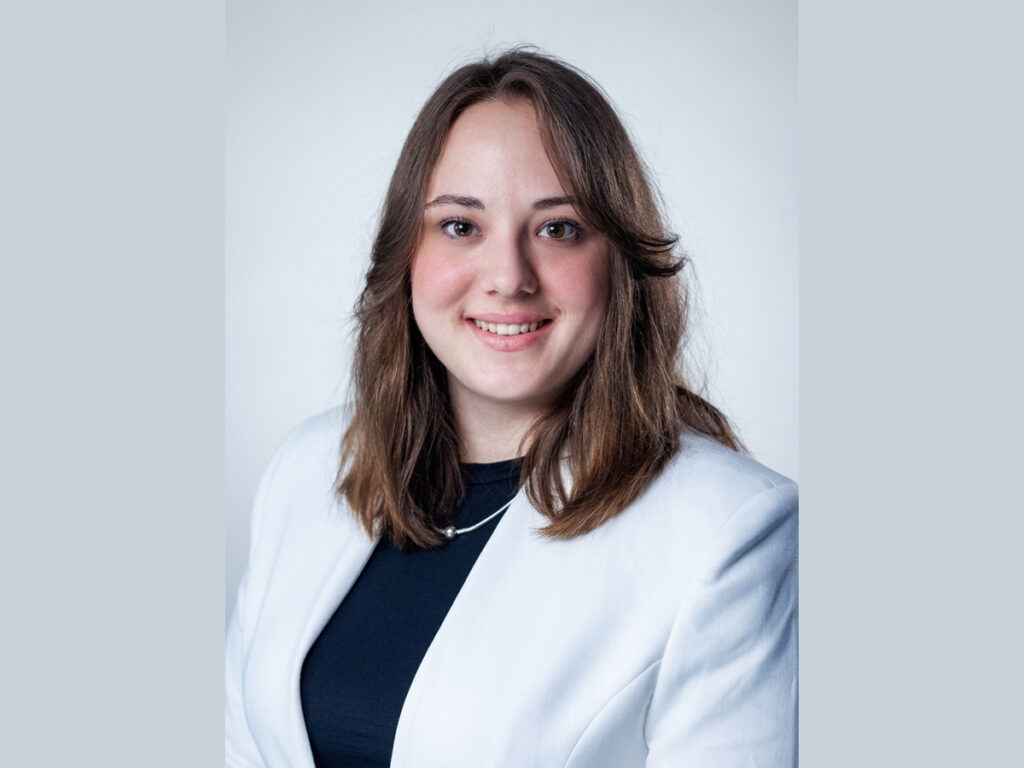
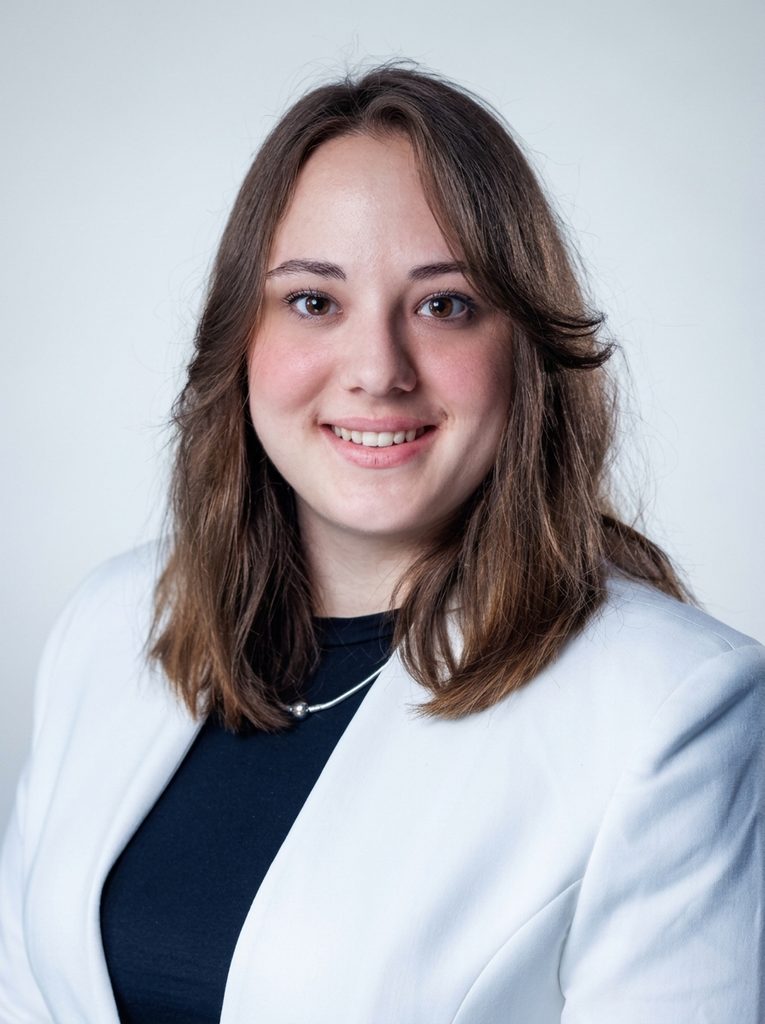
Alumni Interview with Anita Lengyel (Engineering Manager)
At the Crossroads of Two Worlds: From Engineering Management to Sustainability Expertise
Sometimes, a university open day does more than influence a higher education decision; it becomes the starting point of an entire career path. Our interviewee found at the Alba Regia Faculty the professional environment that laid the foundation for a successful career in quality management and sustainability. Today, she works as an LCA Engineer at Grundfos, while also sharing her knowledge and experience with future generations as a part-time lecturer.
- Why did you choose Alba Regia Faculty at the time?
My decision was ultimately based on a personal experience. As a high school student, I was still searching for my path, and the Faculty’s Open Day proved to be a turning point. I was immediately captivated by the university’s atmosphere and the approachable nature of both the lecturers and the students.
It was here that I discovered the Engineering Management program, which seemed like the perfect fit for my broad range of interests. What I particularly liked was that the program bridged the gap between technical and business disciplines. In the end, I also completed my master’s studies at the university, so it is fair to say that choosing this Faculty years ago was definitely the right decision.
- Which course or lecturer had the greatest impact on you?
I know this may sound unusual, but I have always loved going to school and learning, so there were many subjects I enjoyed at university as well. I especially loved the typical management courses that focused on developing soft skills, while Quality Management was undoubtedly my favorite subject.
Throughout my university years, I received support from many lecturers. I would particularly like to mention Dr. habil. Monika Pogátsnik, Gábor Fejes, Mónika Seres, and Zoltán Trenka. All of them were truly motivating, kind, and supportive educators.
- What is the first memory that comes to mind when you think about your university years?
I have many wonderful memories from university. The first thing that always comes to mind is the Institute Evenings, which were consistently enjoyable, both in terms of their organization and the atmosphere during the events themselves.
- How did your career develop after graduation?
If I had to summarize it briefly, I would say that my career has turned out to be far more exciting than I imagined as a graduating student.
After earning my degree, I began my professional journey in the field of Quality Management, which provided an excellent foundation and remains very close to my heart today. I currently work as an LCA (Life Cycle Assessment) Engineer at Grundfos, a role of which I am extremely proud. Although this profession is still relatively uncommon in Hungary, it has become essential in today’s world, where sustainability and environmental protection are key priorities.
In a way, the circle has now come full circle, as I have returned to my alma mater as a part-time lecturer. This is both a great joy and an honor for me, as it allows me to bring real-world professional experience directly into the classroom.
- What was your first job, and what experiences did you gain there?
I consider my first real workplace to have been Hydro, where I spent the years of my dual education program. I gained insight into several areas of the company, which significantly broadened my perspective.
I am particularly proud that I was able to base my thesis on a real corporate project there, and that I subsequently developed the same topic further through the Scientific Students’ Associations Conference (TDK).
- What was the greatest professional challenge you have faced?
As a young professional, the greatest challenge was making the transition from the classroom to the realities of the workplace, particularly when it came to independent decision-making.
Although I had already experienced what it was like to be part of a company during my dual education, entering the world of work as an adult inevitably brings situations where you must stand on your own and take responsibility for your decisions. I consider myself fortunate to work alongside a highly supportive manager, but even so, there have been moments when I had to solve complex problems independently.
At first, this was intimidating. However, the most important lesson I learned was to trust my own knowledge and abilities. It may sound cliché, but it is true. I also learned that making mistakes is not a failure; it is a natural part of growth and an opportunity to learn.
- How do you see the role of universities in today’s world?
Universities play an exceptionally important role in today’s world. They must serve as a bridge between scientific knowledge and market realities.
Their mission is not only to educate professionals but also to help shape modern-minded adults. Universities should provide an environment where students learn to solve problems independently, work effectively in teams, and adapt flexibly to change, whether societal or technological.
- What does your alma mater mean to you today?
For me, my alma mater primarily represents community and a sense of belonging. Over the years, I have built a professional and personal network that continues to accompany me to this day.
- What advice would you give to students who are just starting the same program from which you graduated?
First of all, make the most of your university years because, unfortunately, they pass very quickly.
Secondly, build relationships. Get to know people, have conversations, and do not be afraid to take advantage of the opportunities that university life offers. These experiences and connections can be just as valuable as the knowledge you gain in the classroom.